



Stand in front of the toothpaste shelf at any pharmacy in India and you'll notice something strange. One row is proudly "fluoride-free" and "100% natural." The row right next to it is just as proudly built around fluoride as its star ingredient. Both are asking for your trust, and both can't be telling the whole story.
So which one actually protects your teeth better? If you've been typing "best fluoride toothpaste in India" into Google, or wondering if you should switch to something fluoride-free instead, here's the honest answer — no scare tactics, no oversimplified "natural is better" claims either.
What fluoride is actually doing in your mouth
Your enamel is under attack pretty much all day. Every time you eat something sugary or starchy, bacteria in your mouth turn it into acid, and that acid pulls minerals out of your enamel — a process called demineralization. Your saliva fights back by depositing minerals again. It's a constant back-and-forth, and which side wins determines whether you get a cavity.
Fluoride tips that fight in your favour. It helps build a tougher version of your enamel called fluorapatite, which resists acid much better than the enamel you're born with. Even better, in the very early stages of a cavity — before it's actually become a hole — fluoride can help repair that weak spot before a dentist ever needs to drill it. It also makes life harder for the bacteria producing the acid in the first place.
That's not a marketing claim. It's the reason dental associations everywhere, including in India, still put fluoride toothpaste at the top of the list for daily cavity prevention, whatever else a toothpaste happens to contain.
Why "fluoride-free" became a thing
The fluoride-free wave didn't come out of nowhere — there's a real concern behind it, just a narrower one than the marketing suggests. It's called fluorosis: faint white streaks on teeth that can happen when young kids swallow too much toothpaste, again and again, while their adult teeth are still forming. That's a legitimate reason to use a low-fluoride or fluoride-free toothpaste for toddlers, in tiny supervised amounts.
But that concern doesn't really carry over to adults who spit toothpaste out like they're supposed to. There's no solid evidence that normal fluoride toothpaste use causes harm in that case. Calling fluoride a scary "chemical" to avoid is a branding decision, not a dental one — and honestly, "chemical-free" doesn't mean much on a label anyway, since water and mint oil are chemicals too. If you're specifically hunting for the best non-fluoride toothpaste in India, it's worth being clear on why you want it. Supervising a toddler's brushing is a good reason. Avoiding it as an adult usually just means giving up fluoride's main benefit without gaining much in return.
The number that actually matters: fluoride concentration
Here's something most people never check: not all fluoride toothpaste is dosed the same, and the concentration on the tube matters more than the claims printed around it.
For adults, you want somewhere in the 1000–1500 ppm range (parts per million) — that's the sweet spot most dentist-recommended toothpastes in India are built around. Anything meaningfully below that is usually formulated for very young children, and anything above it tends to be prescription-strength, meant for people a dentist has flagged as high cavity risk.
When you're comparing fluoride toothpaste in India, look for sodium fluoride or sodium monofluorophosphate content on the ingredient list rather than trusting whatever's printed in big letters on the front. A box can say "advanced cavity protection" and still sit well under the concentration that actually does the protecting.
What actually separates a good cavity-fighting toothpaste from a good marketing campaign
If cavity prevention is genuinely your priority, here's what to actually look for in a fluoride toothpaste for cavity protection — this is the boring, useful checklist, not the exciting one:
An effective fluoride concentration, clearly listed rather than hinted at. SLS-free if you're someone who gets mouth ulcers often — and it's worth knowing that Sodium Lauryl Sulfate has nothing to do with fluoride's job of fighting cavities. It's just a foaming agent, and for some people it's an irritant. So "fluoride" and "SLS" are two separate decisions, not a package deal. Beyond that, check the abrasiveness level (listed as RDA) if your enamel is already a bit worn or sensitive, and look for a brand that's upfront about what's actually in the tube instead of leaning on vague "Ayurvedic" or "herbal" language without backing it up.
A lot of people searching for "Fluoride and SLS-free toothpaste in India" assume these two things go together automatically. They don't. You can get a toothpaste that's fully fluoride-active for cavity protection and still SLS-free for a gentler feel — you don't have to trade one for the other.
A few myths worth clearing up
Natural doesn't automatically mean safer. Herbal ingredients like neem or clove oil genuinely can help with antibacterial action, and they're a nice complement to fluoride — but there isn't strong evidence they can do fluoride's specific job of rebuilding enamel on their own.
Charcoal toothpaste isn't the fluoride-free whitening shortcut it's marketed as. It's often more abrasive than standard toothpaste, and using it daily can wear down enamel over time — which works against you no matter what else is in the formula.
Foam isn't a sign that a toothpaste is "working harder." That's SLS doing its thing, not fluoride. A toothpaste can be low-foam, gentle, and still deliver full cavity protection.
And more fluoride isn't automatically better once you're in the effective range. Going past it doesn't add proportional benefit for someone with average cavity risk — higher concentrations exist for a reason, and that reason is usually a dentist's specific recommendation, not a bigger number on the shelf.
What about kids?
India's dental guidance here lines up closely with international recommendations. Under age 3, a rice-grain smear of low-fluoride toothpaste under supervision is the standard advice. Between 3 and 6, a pea-sized amount of regular fluoride toothpaste, still supervised so they're not swallowing much. From 6 onward, the standard adult concentration is generally fine.
This is really where the fluorosis conversation belongs — it's about portion size and supervision, not about avoiding fluoride altogether.
So, fluoride or not?
If you brush twice a day and spit like you're supposed to, a fluoride toothpaste with a clearly listed, effective concentration is still the choice with actual evidence behind it — whether or not it's also SLS-free, herbal-enhanced, or built around sensitivity or whitening on top. Skipping fluoride mostly makes sense in one specific situation: supervising a very young child's brushing. Outside of that, it's less a wellness decision and more a marketing preference.
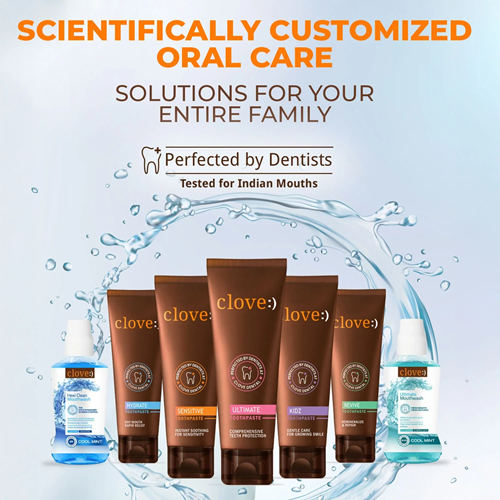
At Clove Oral Care, that's the principle our formulas are built on — an effective fluoride base, SLS-free where it matters, with ingredients we're upfront about rather than hiding behind "natural" as a selling point. Whichever brand you land on, the checklist above — concentration, RDA, SLS, and honest labelling — will tell you a lot more than anything printed in bold on the box.
FAQs Section
Is toothpaste with fluoride good for you?
Yes — it strengthens enamel and is the most evidence-backed ingredient for preventing cavities.
Which toothpaste is high in fluoride?
Toothpastes with 1000–1500 ppm fluoride are standard-strength for adults; higher is prescription-only.
What is the disadvantage of fluoride toothpaste?
The main risk is fluorosis (white spots) in young kids who swallow it repeatedly — not a concern for adults who spit it out.
Why are people avoiding fluoride toothpaste?
Mostly "natural"/"chemical-free" marketing trends, not new safety evidence.
Is it safe to use fluoride toothpaste daily?
Yes, twice-daily use at standard concentration is what dentists recommend.
Why are people stopping using fluoride toothpaste?
Influenced by natural-product branding, and sometimes confusing SLS irritation with a fluoride problem.
Is fluoride in toothpaste harmful?
No, not at standard concentrations with normal use — the only real risk is excess swallowing in young children.
Disclosure: This article is published by the Clove Oral Care team.