

These are our favourite morning rituals we never miss: double cleansing, serum, and some sunscreen, but what about the tooth? Is brushing simply enough? What you eat and what you drink can affect your enamel. And once it’s gone? It never grows back.
In an age of iced Americanos, sparkling water, and stress-driven grinding, enamel erosion has quietly become one of the fastest-growing oral health problems globally. The American Dental Association warns that acid erosion is now affecting both younger and older adults more than ever, due to modern diets and lifestyle habits.
The enamel softens significantly after exposure to acidic beverages, and repeated cycles of softening and hardening increase permanent mineral loss over time.
What is Enamel Erosion? Why is Everyone Talking about it?
Enamel is the strong outer layer of the tooth and is the hardest substance in the human body. It protects the softer, more sensitive layers underneath.
The enamel has no living cells. No nerves. No regenerative ability. Once it is damaged, the loss is permanent.
Our saliva has some buffering capacity, but when the excessive introduction of gastric acids in the oral cavity exceeds its buffering capacity, these acids slowly wear off the enamel. The enamel begins to dissolve when exposed to acids with a pH level below 5.5, resulting in various oral health issues.
Foods and Drinks That Cause Acid Erosion:
Tooth enamel begins to dissolve when the local pH at the tooth surface drops below the enamel “critical pH,” which is approximately 5.5. Repeated exposure to low-pH substances, high titratable acidity (the total acid content), and prolonged oral contact time increase the risk of erosion. Saliva buffers acids and supplies minerals for remineralization. When acidic drinks and foods are frequently consumed, they overwhelm the saliva’s buffering capacity, and the mouth’s environment becomes acidic, which results in the dissolution of the tooth structure.
1) Carbonated soft drinks
Soft drinks or Carbonated drinks were originally made to be enjoyed occasionally, but today they have become a post-meal staple. A pH of 5.5 is considered the “critical pH” for enamel dissolution and 6.8 for dentin. These drinks have very low pH values, often below 4. A clinical study titled “Evaluation of the effect of soft drinks on the surface roughness of dental enamel in natural human teeth” shows soft drinks are among the strongest dietary risk factors for enamel erosion. Even carbonated water, including plain sparkling or seltzer varieties, has been studied in research on enamel erosion. Although significantly less erosive than cola or fruit juices, carbonated water forms carbonic acid, which can reduce pH in the mouth.
2) Fruit juices and vitamin C supplements
High citric acid content (very low pH) and high titratable acidity; “healthy” juices can be as erosive as sodas. Also, taking acidic drinks or vitamin C tablets frequently (especially on an empty stomach) increases enamel softening.
3) Alcohol:
Alcoholic drinks, particularly wine and distilled spirits, cause enamel erosion. Wine contains natural fruit acids, and both red and white varieties have been shown to reduce enamel microhardness. Spirits themselves may be less acidic, but when consumed with sugary or acidic mixers, the erosive risk increases exponentially. Alcohol also has a drying effect on oral tissues, which decreases salivary flow, leading to dry mouth problems.
4) Sour Candies and Citrus Fruits:
Sour candies, medicated lozenges, and chewable tablets are among the most erosive agents due to their extremely high titratable acidity and prolonged contact with teeth. Unlike drinks that are swallowed relatively quickly, dissolvable products linger in the mouth.
Citrus fruits and acidic condiments, such as lemons, pickles, vinegar-based dressings, and tomato sauces, naturally contain citric or acetic acids that can lower oral pH. While these foods are nutritious, their erosive potential increases with the intensity of their consumption. The higher the consumption level, the more it will lead to acid erosion.
|
Highly Acidic |
Medium Acidic |
Low Acidity |
|
Lemon Juice |
Apples |
Black Tea |
|
Vinegar and Vinegar-Based Dressings |
Tomato Ketchup |
Bananas |
|
Cranberries |
Yogurt |
Cucumbers |
|
Pickles |
Buttermilk |
Rye Wheat and White Bread |
|
Tamarind |
Honey |
Coconut Milk |
|
Tomato Juice |
Carrot Juice |
Almonds |
|
Plums |
Fruit Smoothies |
Corn Flakes |
|
Kombucha |
|
|
|
Flavoured Sparkling Water |
|
|
|
Soy Sauce |
|
|
What are the modifiers of Dental Erosion?
● Drop in the pH levels: Saliva and salivary pellicle try to protect the teeth from acid attack. However, regular consumption of components with a pH value lower than 5.5 will lead to dental erosion.
● Frequency and duration: Sipping all day is worse than downing the same amount quickly with a meal.
● Saliva flow and buffer capacity: Dry mouth, mouth-breathing, dehydration, vaping and consumption of tobacco will eventually lead to dental erosion.
● Temperature and abrasivity interactions: cold or warm drinks and abrasive toothbrushing soon after acid exposure increase wear.
Signs Your Enamel is Under Acid Attack:
● A sharp pain the moment you sip cold water
● The edges of your front teeth start looking translucent
● Yellowing of your teeth
● Teeth looking shorter or more rounded
● A rough or chalky texture
The good news? Awareness is the first step to prevention.
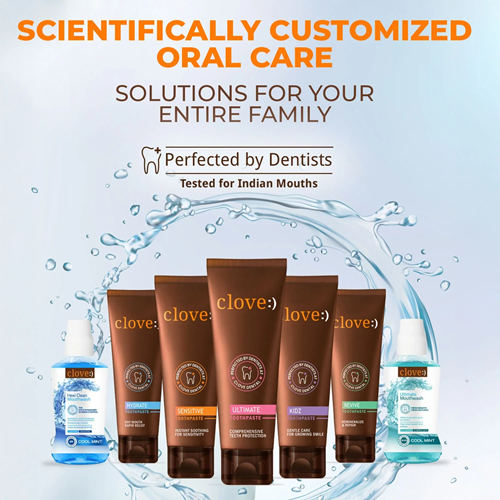
1. Start using toothpastes that have fluoride: According to a study titled “How Fluoride Protects Dental Enamel from Demineralization,” fluoride not only slows demineralization but actually helps remineralize early-stage erosion by forming fluorapatite, an acid-resistant mineral. The Clove Sensitive contains sodium fluoride, which helps provide instant relief to dentin hypersensitivity issues and strengthens the enamel.
2. Do not brush right after acid exposure: Brushing immediately after drinking wine, coffee, or citrus is like scrubbing a softened nail.
● Rinse thoroughly with water
● Wait 30 minutes
● Brush gently with a soft-bristle brush
A study titled “Impact of brushing force on abrasion of acid-softened and sound enamel” warns that brushing softened enamel increases surface loss by 50%.
3. Limit the frequency of acidic beverages and food: Overconsumption not only depletes your oral health but also poses a threat to your overall health.
4. Make sure you have a healthy salivary flow: Saliva is the natural enamel protector. Your saliva has the capacity to protect your teeth from acid attacks. Avoiding smoking, as it reduces saliva flow and pH. Maintain good oral hygiene and use the Clove Hydrate to boost the saliva flow in your mouth.
Our hero product for enamel remineralization is the Clove Revive Toothpaste. It works by protecting and repairing weakened enamel. This dentist-perfected formula is curated for all Indian mouths as it is free from harsh additives such as triclosan, parabens, and peroxide. The Sodium Monofluorophosphate (SMFP) protects your enamel, and Calcium Glycerophosphate (CaGP) promotes deep remineralization and acid resistance. It fights erosion at its root. Potassium Nitrate helps calm sensitivity caused by nerve irritation and exposed dentin, while Zinc Gluconate targets harmful bacteria and supports healthier gums.
A radiant smile, good tooth shape, and the confidence to laugh without hesitation all begin with strong enamel. Bad odour, yellowish teeth, and eroded enamel will deprive you of your confidence.