



You wake up in the middle of the night reaching desperately for your water glass. Your throat feels like sandpaper, your tongue sticks to the roof of your mouth, and no matter how much water you sip during the day, that refreshing moisture never seems to stay.
If you are a woman in your late 30s, 40s, or 50s, you might blame the weather, a salty dinner, or sleeping with your mouth open. But if this sticky, uncomfortable dryness has become your daily reality, there is a much bigger culprit at play—one that rarely makes it into mainstream health conversations: Menopause.
While hot flashes, night sweats, and mood changes steal the spotlight, menopausal xerostomia (the medical term for severe chronic dry mouth) silently affects up to 45% of women undergoing the hormonal transition.
In this article, we will unpack the invisible link between declining hormones and oral health, look at the early warning signs you should not ignore, and explore effective ways to get your natural smile and comfort back. (For a complete breakdown of xerostomia symptoms, check out our guide on Menopause and Dry Mouth: Causes, Early Signs, and Effective Relief Options.
The Silent Catalyst: How Estrogen Loss Deprives Your Mouth of Moisture
To understand why your mouth suddenly feels like a desert, you have to look at Estrogen.
We usually think of estrogen purely as a reproductive hormone. However, estrogen receptors are scattered throughout the human body, specifically concentrated in your mucous membranes. These sensitive linings coat your eyes, nasal passages, gastrointestinal tract, and yes—your entire oral cavity.
When you enter perimenopause or menopause, your ovaries gradually produce less estrogen. Here is how that hormonal shift directly impacts your mouth:
1. Salivary Glands Slow Down
Your salivary glands rely on estrogen signals to regulate continuous fluid production. As estrogen drops, these glands decrease their overall output. Saliva production can plummet by up to 50% during menopause.
2. The Texture of Saliva Changes
Estrogen deficiency does not just reduce the quantity of your saliva; it worsens the quality. Saliva shifts from being thin, watery, and cleansing to thick, ropey, and sticky. Instead of washing over your teeth, it leaves a heavy film that feels unpleasant.
3. Oral Tissue Thinning & Collagen Loss
Estrogen keeps oral tissues plump and hydrated by stimulating collagen. When estrogen vanishes, the lining inside your cheeks, lips, and gums becomes thinner, more delicate, and significantly more sensitive to friction, heat, and acidic foods.
Early Signs You Shouldn't Ignore
Menopausal dry mouth sneaks up slowly. At first, it feels like temporary dehydration, but over time, it manifests in distinct ways:
-
The "Cotton-Mouth" Sensation: A constant sticky feeling inside your cheeks and on your tongue.
-
Middle-of-the-Night Parched Throat: Waking up multiple times every night needing water just to unstick your mouth.
-
Difficulty Swallowing & Speaking: Struggling to swallow dry foods (like crackers or bread) or losing your voice during long conversations because your mouth lacks lubrication.
-
Burning Mouth Syndrome (BMS): A persistent scalding or tingling sensation on your tongue, gums, or the roof of your mouth, similar to eating hot soup.
-
Persistent Bad Breath: A sudden increase in bad breath (halitosis) that doesn't go away even after thorough brushing.
-
Chapped Lips & Cracked Mouth Corners: Painful sores or cracks (angular cheilitis) at the corners of your lips.
Why Ignoring Dry Mouth Is Dangerous for Your Teeth
Saliva is not just wetness—it is your mouth’s primary defense force. It contains enzymes, calcium, phosphate, and natural antibodies that continuously shield your smile. When saliva disappears, several severe dental issues can follow rapidly:
-
Surge in Cavities: Saliva washes away food particles and neutralizes plaque acids. Without it, bacteria thrive, leading to rapid decay—especially along the delicate gumline.
-
Gum Disease Acceleration: A dry oral environment triggers gum inflammation, bleeding, and gum recession (periodontitis).
-
Oral Thrush & Infections: Yeast and fungal organisms flourish in dry, warm environments, increasing the risk of painful oral thrush.
How to Reclaim Moisture: 4 Actionable Relief Steps
Living with menopausal dry mouth can feel frustrating, but targeted habits and specialized oral care make it completely manageable.
1. Rethink Your Daily Hydration Strategy
Drinking water all at once won't fix chronic salivary failure because your body flushes it out quickly. Instead:
-
Take frequent, small sips of water throughout the day.
-
Keep a water bottle with a straw nearby to encourage continuous micro-hydration.
-
Run a cool-mist humidifier in your bedroom at night to keep the air moist while you sleep.
2. Eliminate Moisture Robbers
Certain lifestyle choices pull remaining moisture straight out of your mouth:
-
Avoid alcohol and caffeinated drinks in excess, as both act as natural diuretics.
-
Limit salty, spicy, or acidic foods that irritate already sensitive, thin oral tissues.
-
Stop using harsh mouthwashes containing alcohol, which temporarily feel fresh but severely dry out oral linings.
3. Stimulate Natural Saliva Production
Chew sugar-free gum containing Xylitol. Xylitol stimulates salivary flow through the physical act of chewing while actively preventing cavity-causing bacteria from clinging to your teeth.
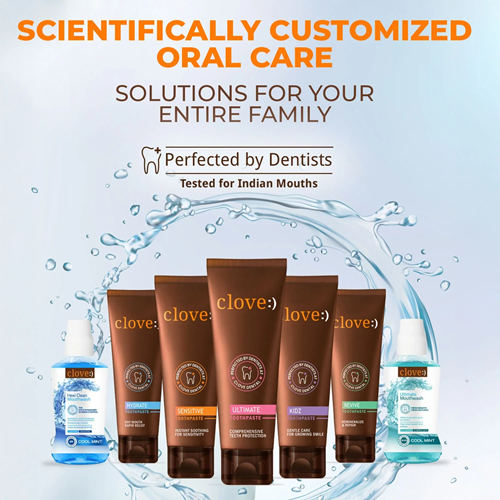
4. Switch to a Specialized Oral Care Solution: Clove Hydrate Toothpaste
Regular daily toothpastes often contain aggressive foaming agents like Sodium Lauryl Sulfate (SLS), strong artificial flavors, or harsh chemicals. For a menopausal woman dealing with compromised salivary glands, these regular toothpastes cause further irritation and dryness.
To effectively combat menopausal dry mouth, you need a product explicitly engineered for rapid moisture restoration—like Clove Hydrate Toothpaste.
Why Clove Hydrate Toothpaste Is the Ultimate Solution:
Crafted by dental experts specifically to address xerostomia, Clove Hydrate Toothpaste works directly with your body to rebuild your oral moisture barrier:
-
Patented Optaflow® Technology: Powered by clinical Optaflow technology, it acts on salivary glands to naturally boost saliva flow by up to 150%, providing immediate, long-lasting moisture.
-
Enriched with Xylitol: Formulated with high-grade Xylitol, it triggers natural saliva production, balances oral pH, and shields your teeth against plaque buildup.
-
Enamel Protection & Remineralization: Delivers essential minerals directly to weakened enamel, neutralizing acids and preventing the rapid tooth decay associated with dry mouth.
-
Clean & Gentle Formula: Completely free from SLS, parabens, peroxides, and artificial sugars, making it extremely gentle on sensitive, dry gums and delicate tissues.
By replacing your standard toothpaste with Best toothpaste for menopausal dry mouth
every morning and night, you create a continuous moisture-locking barrier that keeps your mouth feeling fresh, hydrated, and protected throughout the day and night.
A Simple Daily Routine for Lasting Comfort
-
Morning: Brush gently for two minutes using Clove Hydrate Toothpaste to lock in initial moisture and protect your enamel for the day ahead.
-
Afternoon: Sip water regularly and chew Xylitol gum after meals to keep saliva moving.
-
Night: Brush again with Clove Hydrate Toothpaste right before bed to help shield your mouth from overnight dryness.
Final Thoughts: Don't Suffer in Silence
Menopause is a transformative journey, and every symptom you experience—including oral dryness—deserves attention and care. You don't have to put up with the discomfort of a dry, burning mouth or risk your long-term dental health.
By understanding the estrogen connection, adjusting your daily hydration, and upgrading your routine with targeted solutions like Clove Hydrate Toothpaste, you can easily restore your mouth's natural moisture, protect your teeth, and smile with total comfort and confidence once again!