

You brush. You swear you floss and rinse thoroughly, but do you really do it? Oral issues have always persisted, yet somehow they were not discussed. However, we see a paradigm shift, a shift towards awareness, a shift towards education, and doing right by your mouth. We all want to take care of our oral hygiene, we buy that expensive toothpaste or that mouthwash, yet still do not see the results. Have you ever wondered why? That is because you are probably making these mistakes:
1. Brushing Too Hard or With the Wrong Brush
You may think force means clean, but your mouth is not your toilet floor. Using a hard-bristled brush or pressing down hard while brushing can wear down enamel and irritate gums. The BBC published an article on how to brush properly, observing that most people brush their teeth incorrectly. Several dental professionals emphasise that excessive pressure or a brush that is too hard can cause enamel erosion and gum recession. According to the article, brushing your teeth too hard with a firm-bristle toothbrush can cause small tissue tears, leading to wear and tear on your gums. This may also open the gates for bacteria to enter the bloodstream and cause decay.
Instead, use the Clove Ultimate Toothbrush, hold it lightly, and brush in gentle circular motions at a 45-degree angle toward the gumline. This is enough to sweep away plaque without damaging your enamel or gums. Its diamond-shaped head is designed to reach the inaccessible areas and gently clean them without harming the gums.
2. Brushing Right After Eating or Drinking Foods and Beverages with High Acidic Content
Acidic beverages and food items can destroy your enamel when consumed regularly. It is tempting to freshen up right after a meal. According to the Indian Dental Association, acids can temporarily demineralise the enamel, making it soft. You need to give yourself some time before you rush to brush your teeth.
Dental experts recommend waiting at least 30 minutes after eating or drinking acidic foods and beverages before brushing your teeth. Meanwhile, rinse your mouth thoroughly with plain water. This waiting period helps saliva restore a safer pH and re-harden the enamel before you brush.
3. Skipping Flossing:
Many assume brushing alone is enough, but the truth is that flossing is as crucial as brushing. A toothbrush cleans about 60% of surfaces; the rest, especially between teeth and below the gumline, needs floss. Skipping flossing leaves plaque and food residue in those hidden corners that become a prime breeding ground for cavities and gum disease.
Some of you do floss, but you do it incorrectly. Snapping floss between teeth can injure gums and still leave plaque behind. Firstly, you need to choose the right dental floss. Then, curve the floss around each tooth in a ‘C’ shape and gently slide it up and down, making sure you go slightly below the gumline to clean effectively. Be Gentle! You do not want to damage your gums.
4. Using an Old or Worn-Out Toothbrush
Your toothbrush is like your makeup brush, ineffective when worn out. Over time, bristles fray, lose their shape, and harbour bacteria. That means less cleaning power and more risk of gum irritation or bacterial growth. Your toothbrush may retain the debris and send bacteria right back in, causing more harm than good. According to an article by the BBC titled “Your toothbrush is bristling with bacteria - is it time to change it?”, it is stated that your old toothbrush becomes home to 1-12 million bacteria and fungi, forming biofilms on its surface.
Toothbrushes play a central role in oral hygiene, and dentists recommend replacing your toothbrush (or electric brush head) every 3-4 months, or sooner if the bristles show wear. A fresh brush is softer, cleaner, and far more effective at reaching into gum lines and tooth crevices.
5. Ignoring Your Tongue and Other “Non-Tooth” Surfaces
You need to understand that when we talk about oral hygiene, it is not only about your teeth, but the entire oral microbiome. Teeth get most of the attention, but a big source of plaque, bacteria, and bad breath hides on your tongue. Its grooves and rough surface trap microbes and leftover food particles, which brushing alone often misses. According to a study titled “Is the oral hygiene complete without the tongue cleaning?”, it is mentioned that the tongue is a breeding ground for bacteria that cause bad breath. The bacteria continue to accumulate on the tongue, which may lead to cavities and periodontal disease.
Gently brush your tongue or use a tongue scraper after brushing your teeth. This helps remove odour-causing bacteria and prevents them from redepositing onto your teeth or gums.
6. Brushing with a Toothpaste that Does Not Target Your Dental Problem
A simple trick to maintain your oral health is to diagnose your problem accurately. One of the most overlooked mistakes in oral care is using a toothpaste that simply does not match the problem you actually have. Most people buy whatever looks familiar on the shelf or whatever is trending. But trends won't solve your dental issues.
If you struggle with sensitivity, a whitening toothpaste may not give you proper relief. If your concern is enamel thinning, a basic mint gel will not give you sufficient protection. The truth is simple: your toothpaste should work for you. Start by identifying your real concern, such as sensitivity, gum inflammation, cavities, staining, enamel erosion, or dryness, and then choose a formula curated to target that issue.
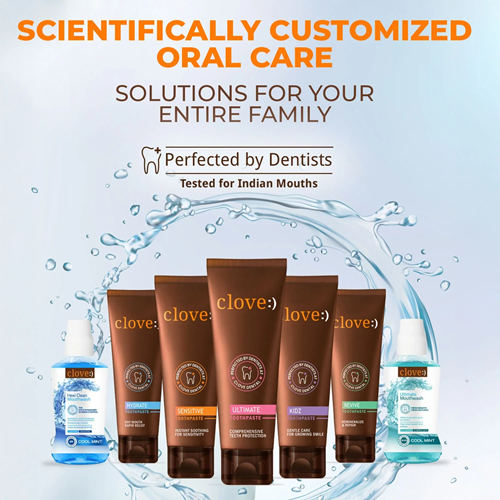
Clove Toothpastes have dentist-perfected formulations and are curated to target specific dental needs:
Clove Ultimate is to target bad breath, dental cavities, and teeth discoloration
Clove Sensitive is designed for individuals who experience hot and cold sensitivity.
Clove Revive targets sweet and sour sensitivity, helping to remineralize and repair teeth enamel.
Clove Hydrate is used to treat dry mouth conditions.
7. Skipping Regular Dental Check-Ups
Even if your home routine is flawless, there are issues that only a trained dentist can diagnose, such as hardened tartar, early gum inflammation, enamel wear, hidden cavities, or bite alignment issues.
Regular check-ups (ideally twice a year) enable professionals to identify the dental condition, provide proper advice, and intervene early before small issues become costly problems. Prevention is always better than a cure.
Why do we miss out on Important Dental Care?
● We live in a fast-paced world, and life gets busy. Mornings are rushed; nights are lazy. So we brush fast, skip flossing, or skip changing brushes.
● Most of you think that dental hygiene means brushing your teeth. We forget gums, tongue, floss, and timing.
● We often overlook long-term consequences such as enamel wearing away, gum recession, and chronic bad breath.
● We do not place much importance on the ingredients in our dental products.
What to do instead:
● Brush your teeth twice a day with a soft brush.
● Floss daily, using proper technique.
● Replace your toothbrush every 3to 4 months.
● Clean your tongue daily.
When you stop treating your oral hygiene as a chore and start seeing it as self-care, the payoff shows: brighter teeth, healthier gums, fresher breath, and long-term confidence.